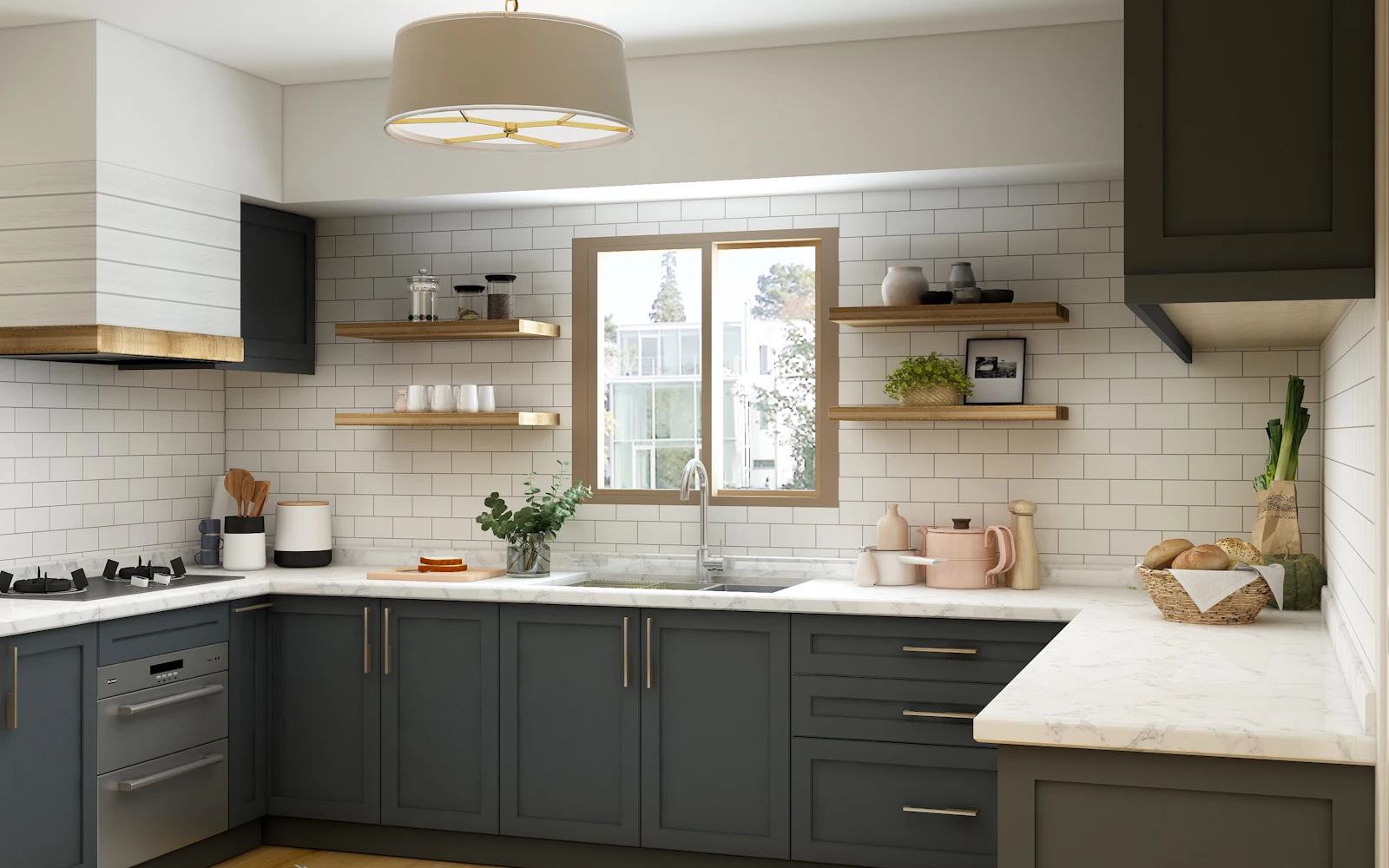
Granite countertop repair
Speckled and solid granites hide a fill differently. The visit treats the mineral pattern, the support, and any sealer question as separate issues.
Typical damage: edge chips, cracks near cutouts, dull spots.
Materials: existing granite only.
The assessment checks whether a fill would sit in sound stone.
Read the granite countertop repair page
Request an estimate
Quartz countertop repair
Engineered quartz is a resin surface. Chips at the edge are the usual request. Heat marks and whole-top refinishing are not treated as the same job.
Typical damage: edge chips, some cracks, open seams, scorches.
Materials: existing engineered quartz.
The assessment separates a fillable chip from resin damage that filler will not hide.
Read the quartz countertop repair page
Request an estimate
Marble countertop repair
Marble is calcite, so lemon and vinegar etch it. Chips, scratches, and dull spots need a finish plan, and a sealer will not restore shine.
Typical damage: etch, scratches, chips, some stains.
Materials: marble countertops in kitchens and bathrooms.
The assessment says which marks are etch, which are stains, and which are missing stone.
Read the marble countertop repair page
Request an estimate
Quartzite countertop repair
Quartzite is natural stone with a confusing name. It is not repaired with quartz assumptions, and only some of it benefits from sealer.
Typical damage: chips, edge loss, tight cracks.
Materials: installed quartzite, confirmed on site.
The assessment identifies the stone before a method is chosen.
Read the quartzite countertop repair page
Request an estimate
Countertop chip repair
A chip is a missing shape. Corners, front edges, and sink cutouts each change how a fill has to be built.
Typical damage: nicks, broken corners, small edge losses.
Materials: granite, quartz, marble, and quartzite.
The assessment judges size, profile, and how visible a match would be.
Read the countertop chip repair page
Request an estimate
Countertop crack repair
The first question is whether the line is stable. A tight, supported crack may be filled. A crack that has stepped is a different recommendation.
Typical damage: hairline lines, cracks at cutouts, impact breaks.
Materials: sound slabs of granite, quartz, marble, or quartzite.
The assessment checks height, support, and whether the line is actually a seam.
Read the countertop crack repair page
Request an estimate
Edge and corner repair
Rebuilding an eased, beveled, or decorative edge means following the profile that is installed, not inventing a new one in filler.
Typical damage: chipped corners and broken edge details.
Materials: the stone already on the cabinet.
The assessment says if the profile can be continued or if the loss is too large.
Read the edge and corner repair page
Request an estimate
Seam repair
Joints open, darken, or develop a lip. Refilling helps when the slabs still align. It does not pull a settled cabinet back into place.
Typical damage: separated fill, stained joints, minor lips.
Materials: joined stone and quartz tops.
The assessment checks alignment before the joint is reworked.
Read the seam repair page
Request an estimate
Scratch repair
A line a fingernail catches is not the same as a mark that vanishes when the stone is wet. Marble can often be refined. Quartz usually cannot be broadly buffed.
Typical damage: knife lines, drag marks, wear paths.
Materials: refinishable natural stone, and quartz only in limited cases.
The assessment uses raking light and talks about sheen, not only the line.
Read the scratch repair page
Request an estimate
Stone countertop polishing
Polishing brings back reflection after the face is even. It is a finish step for suitable natural stone, not a way to erase chips.
Typical damage: dull marble, haze, traffic wear.
Materials: marble and other natural stone that can take a new sheen.
The assessment rules out residue and quartz before any abrasion.
Read the stone countertop polishing page
Request an estimate
Stone countertop restoration
Use this when etch, small chips, and a tired finish are all on the same top and should be planned as one surface.
Typical damage: combined wear on natural stone.
Materials: marble, granite, and some quartzite.
The assessment lists which marks can change and which will remain.
Read the stone countertop restoration page
Request an estimate
Stone countertop sealing
A penetrating sealer slows absorption in porous natural stone. It is not a repair, and it is not routine care for engineered quartz.
Typical concern: water that darkens the stone.
Materials: absorbent granite, marble, and some quartzite.
The assessment is a simple absorption check, which sometimes ends in doing nothing.
Read the stone countertop sealing page
Request an estimate
Stain removal
Oil, organic color, metal marks, and hard-water film are identified before treatment. Etch on marble is not called a stain.
Typical damage: shadows and colored spots in porous stone.
Materials: absorbent natural stone. Quartz marks are diagnosed first.
The assessment avoids a blanket treatment and does not promise a vanished mark.
Read the stain removal page
Request an estimate